
this
page brought to you by  reader’s
comments
reader’s
comments
Newsmedianews.com
this
page brought to you by reader’s
comments
Newsmedianews.com
Searching the Internet using the term 'Boreatton Park' pulls up a few thousand results, almost all of them relating to the mansion above. Most are connected to the current use of Boreatton Park as an adventure centre. But it has a much more colourful past.
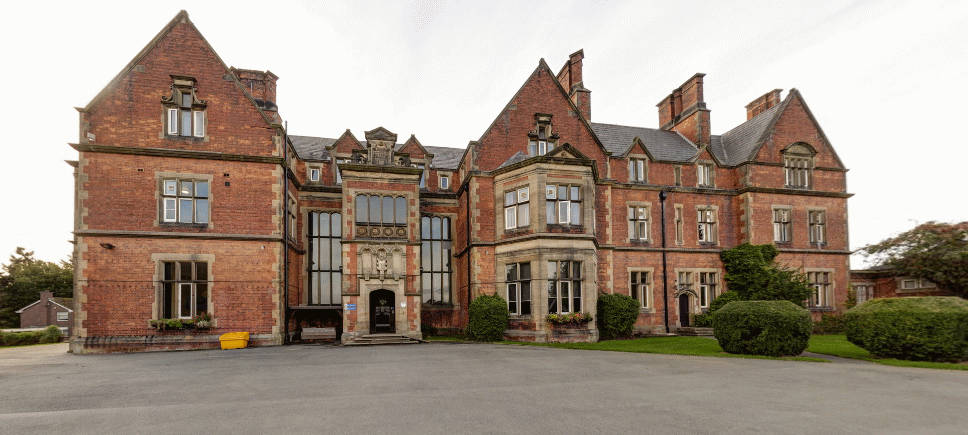
Looking in these shots like something out of a Hammer or Hitchcock movie, the mansion stands in its own acreage a few miles from the quaintly-named village of Stanwardine-in-the-Fields, near Baschurch in Shropshire, England. Originally completed in 1857, these days it serves as ‘a self-contained adventure centre of 250 acres - suited to all age ranges. The estate contains two lakes, woodland, parkland and a 40ft sandstone cliff. The river Perry flows along the park boundary, while two sheltered lakes in the estate provide the opportunity to kayak and raft build. Boreatton Park is a perfect setting for Pony trekking, with the centre's own ponies used’. It is a pity that the photograph shows less than half of the building, which stretches to the left as well as wraps about an inner courtyard.
In days gone by, unless you were employed by the Home Office to work at the place, the only way you could get to stay or spend some time there was as an involuntary guest who was sent there by a court of law.
The rear of the mansion overlooks the Shropshire plains and affords a clear view across into Wales. It also used to accommodate a rugby pitch and athletics field, from where I once observed a powerful twister that snaked to the ground from a fairly high cloud base many miles away across the plain and which would have caused considerable damage had it encountered buildings before it died after several minutes.
In those days, Boreatton Park was an approved school, a place where youths aged from 14 to 18 would end up after being sent by the courts for corrective training. The complete upper floors were dormitories for the 114 or so 'inmates'; areas that before lights-out at night bore witness to some ugly bullying scenes etched into my memory. And not just at the night times. I witnessed many things that might be more like you‘d expect in a top security US jail. Yet there was a thread of camaraderie.
It was a curious existence. A courtyard was behind the right wing and despite its apparent shelter, the sharp winter winds would show no mercy to the short trousered boys who would have to stand in parade lines before filing in to the dining area for meals, or before going to their respective 'jobs', be it farming, gardening, woodworking, engineering, or general classes. It was only in the wettest and roughest of weather that we would be excused parading on the open yard and instead allowed the luxury of parading in the shelter of the mansion's main hall. Cold was not a excusatory factor. And boy, it got cold!
Smoking was strictly taboo, although I understand that it was later permitted when a new governor took over. There were well equipped workshops, a fine gymnasium, and the school had its own successful athletics and rugby teams, of which I was a member of both. The teams were well respected and with good reason - we had excellent coaches who knew their job well and despite the prison-like mood, team members were fully committed to their sport. Old Boreattonians will well recall "Stumpy" Mason and "Sweaty" Hughes ! The athletics team participated in an all-England junior chamionship held at Leeds athletics stadium, wehere we easily won the relay race events. As for myself, after several months of training and being timed as a fast sprinter, I tripped off the starting block and yet still managed to finish third in the 100 yards sprint, which I would have easily won if my start had been faultless.
There was also one memorable occasion when about 15 lads were scything the long grass on the fields at the back of the main building, overlooking the Shropshire plains with a view stretching towards Wales in the distance. It was a balmy summer afternoon and a bank of cloud was visible many miles away across the plain. Suddenly, a twister began to slowly snake down from the base of the cloud and made its way down to make contact with the ground. I was the first to spot the happening and alerted the others and, spellbound, we all watched for some 10 minutes before the tornado died. I estimate the the cloud base was at least 1500ft and possibly more.
And then there was the week-long break for army cadet members at the old army base at Lydd in Kent, and the 2-week 'holiday' at Dyffryn Ardudwy in Wales, where on one memorable trip up into the Welsh hills we arrived exhausted at the top and sat with our backs to the Welsh stone wall that ran fully over the length of the brow of the hill and one lad stood up to call out 'anyone seen the sweaty pig in the last hour...' — and of course the sweaty pig was none other than Mr Hughes who suddenly popped up on the other side of the wall with the snarled question 'somebody looking for me ?'
For a time it was my job to print the school's A4 and A5 headed letter paper on an old, pedal flywheel ink press printer. There was a telephone number, an address, the name of the headmaster, or governor as he was known, and at the top, the name Boreatton Park School in a typeface as similar to what is shown as I can now find.
The Boreatton ‘punishment’ was the loss of freedom, but aside from the thuggery and bullying, there the punishment ended. There were outings, camps for those who joined the school's army cadet Corps (I made corporal !), canoeing trips, even a two week break in the summer to Dyffryn Ardudwy on the Welsh coast, where we stayed in some converted barns close to the beach. There was a trip to Lydd in Kent and many local outings, including weekend breaks at Nesscliffe army barracks. You have to bear in mind that to get to Boreatton Park in those days as a 'guest', you had to have done something to take you before the courts.
And in that line, there have been a number of residents who became household names in later years, Roy Harper and Benjamin Zephaniah for instance.
There is also a curious story behind Boreatton Park itself.
Its construction was designed on the calendar — 12 chimney stacks each with four stacks and seven pots; 12 bedrooms, 52 doors - the whole architectural design was based on elements of the calendar. But the original owner and developer went bankrupt and a consortium of business people banded together to complete it. Inside the high ceilinged main hall, through the front door visible in the picture on the left, wooden family shields lined the upper walls, each representing a link with the mansion by those who banded together to complete its construction. Click the image to see a picture of the Hunt family, who originally lived at Boreatton Park when it was built. You can also read a potted history by the current owners PLG here.
In its approved school days, the room to the lower left was a library, above that was the TV room, and above that a clothing store where ‘Sunday best’ togs were kept, then next to the small toilet window to the right was the 12-bed dormitory where the author slept. The lower bay window to the right of the main door was the governor's office, who also had accommodation inside the mansion. Before the approved school was closed, its occupants built a new house for the governor off to the left of the picture.
In those days, almost the entire group of boys would be required to wear their establishment provided uniform Sunday civvies and march in military parade format down the long drive to the road and continue a few miles along the country roads to the nearby village of Baschurch to attend Sunday morning church service, come rain or shine.
There is probably little, if anything to suggest to the modern visitor that they are in a former young person's detention centre. Oh, there were (maybe still are?) a few wooden panels on the walls that if removed would reveal where I put my name before replacing the restored panels as part of my carpentry training, and there were a few very heavy oak doors in the building that I helped refurbish and re-hang.
The original mansion house and stable block in Boreatton Park were completed in 1857 and is of an imposing Victorian design, approached regally through the landscaped parkland of the estate.
The estate was purchased in 1884 by Dr Sankey and became a psychiatric asylum and later, in 1942 the Home Office purchased the site and it became a correction centre for delinquent boys. In 1969 it again changed and became a community home, which closed in 1974. After remaining empty for some years Boreatton Park was purchased by PGL in 1978 and opened on 14th April 1979 for two hundred 8-12 year old individuals.
† Do you have access to any detailed historical information about Boreatton Park? If you do, the site editor would greatly appreciate hearing from you. newsmedia@eircom.net

Virtual tour of modern Boreatton Park
Pictures of and related to Boreatton Park, courtesy of Robbie McCauley and Cyril Middleton. The colour print of Boreatton Park is a painting from a photograph by Cyril Middleton.
Click the start button to begin the slideshow below.
Boreatton Park Finally, thank you for reading the information on this web page.
Keith HarrisPlease note that neither the author of this item nor this website has any connection with PGL, the current ownership and management of Boreatton Park. Please address all inquiries to the centre through their website
Were you at Boreatton Park in its days as a correction centre and wish to contact the author?
Do so here
Readers’ comments can be found here

news
resources
Afghanistan | Africa | Albania | Algeria | Andorra | Angola | Anguilla | Antigua | Argentina | Armenia | Aruba | Asia | Australia | Austria | Azerbaijan | Bahamas | Bahrain | Balkans | Bangladesh | Barbados | Belarus | Belgium | Belize | Benin | Bermuda | Bhutan | Bosnia | Bolivia | Botswana | Brazil | Brunei | Bulgaria | Burkina | Burma | Burundi | Cambodia | Cameroon | Canada | Cape Verde | Caribbean | Cayman Islands | Cen African Rep | Chad | Chile | China | Christmas Island | Columbia | Comoros | Congo | Cook Island | Costa Rica | Croatia | Cuba | Cyprus | Czech/Slovakia | Denmark | Djibouti | Dominican Republic | Dubai | East Timor | Ecuador | Egypt | El Salvador | Equatorial Guinea | Eritrea | Estonia | Ethiopia | Europe | Faroe Islands | Fiji | Finland | France | Gabon | Gambia | Georgia | Germany | Ghana | Greece | Greenland | Grenada | Guadeloupe | Guam | Guatemala | Guinea | Guyana | Haiti | Holland | Honduras | Hong Kong | Hungary | Iceland | India | Indonesia | Iran | Iraq | Ireland | Israel | Italy | Ivory Coast | Jamaica | Japan | Jordan | Kazakhstan | Kenya | Kiribati | Korea | Kuwait | Kyrgyzstan | Laos | Latvia | Lebanon | Lesotho | Liberia | Libya | Lietchtenstein | Lithuania | London | Luxembourg | Macau | Macedonia | Madagascar | Malawi | Malaysia | Maldives | Mali | Malta | Marshall Islands | Martinique | Mauritania | Mauritius | Mexico | Micronesia | Moldova | Monaco | Mongolia | Montenegro | Montserrat | Morocco | Mozambique | Namibia | Nauru | New Zealand | Nicaragua | Niue | Niger | Nigeria | Northern Ireland | Norway | Oman | Pakistan | Palau | Palestine | Panama | Paraguay | Peru | Philippines | Pitcairn Islands | Poland | Portugal | Qatar | Romania | Russia | Rwanda | Samoa | San Marino | Sao Tomé | Saudi Arabia | Scandinavia | Senegal | Serbia | Seychelles | Sierra Leone | Singapore | Slovakia | Slovenia | Solomon Islands | Somalia | South Africa | South Americas | Spain | Sri Lanka | St Kitts | St Lucia | St Pierre | St Vincent | Sudan | Suriname | Swaziliand | Sweden | Switzerland | Syria | Taiwan | Tajikistan | Tanzania | Thailand | Tibet | Togo | Tonga | Trinidad | Tunisia | Turkey | Turkmenistan | Turks & Caicos | Tuvalu | Uganda | Ukraine | United Kingdom | United States | Uruguay | Uzbekistan | Vanuatu | Venezuela | Vietnam | Virgin Islands | Walli & Futuna | Yemen | Zambia | Zimbabwe | World
Human
Rights | Science | Journalism | Music | Showbiz | Sport | Technology
Clickable News Globe
Top
|
Privacy | Forum |
Comment
 MP3
Sounds | Links
| Publicity |
Contact
MP3
Sounds | Links
| Publicity |
Contact
On-line
Editing | Publish
news | Guestbook | Site
Status | Site
Map
 Seed
Newsvine
Seed
Newsvine
© Newsmedianews—